

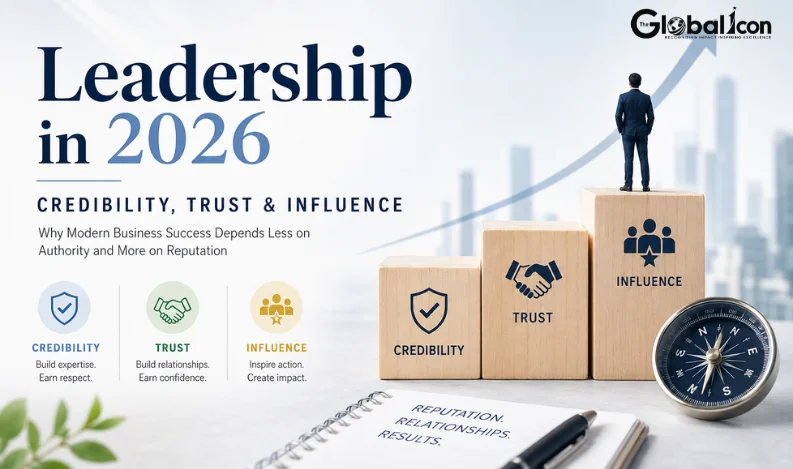
Why Modern Business Success Depends Less on Authority and More on Reputation
The definition of leadership is evolving. For decades, leadership was often associated with position, authority, and control. Executives earned influence through organizational hierarchy, decision-making power, and access to resources. While these factors still play a role in business success, they are no longer enough to sustain leadership effectiveness in today's highly connected and transparent world.
In 2026, the most successful leaders are not necessarily those with the biggest titles, the largest organizations, or the greatest budgets. Instead, they are the individuals who have earned credibility, built trust, and developed influence. These three qualities have become the new currency of leadership, shaping how leaders attract opportunities, inspire teams, engage stakeholders, and drive sustainable growth.
The rise of digital communication, social media, professional networking platforms, and global information access has fundamentally changed how people evaluate leaders. Customers research executives before doing business with a company. Investors examine leadership reputations before committing capital. Employees seek organizations led by authentic and trustworthy individuals. Partners and stakeholders increasingly prioritize credibility over corporate messaging.
As a result, leadership is becoming less about authority and more about relationships. The ability to earn trust, demonstrate expertise, and influence others positively has become one of the most valuable assets a business leader can possess.
Organizations that understand this shift are investing not only in operational excellence but also in leadership visibility, reputation management, and thought leadership. They recognize that in an economy driven by attention, transparency, and connection, credibility, trust, and influence are powerful competitive advantages.
Leadership Is No Longer Defined by Position Alone
Historically, leadership authority often came from organizational structure. Executives held influence because of their roles, responsibilities, and decision-making power. Employees followed instructions, customers trusted established brands, and stakeholders relied heavily on institutional reputation.
Today's business environment is different.
Information is more accessible than ever before, and stakeholders are increasingly informed, connected, and empowered. People no longer accept authority automatically. Instead, they evaluate leaders based on expertise, integrity, communication, and authenticity.
This shift has created a new leadership reality. Holding a leadership position may provide authority, but credibility must be earned. Trust cannot be demanded. Influence cannot be imposed.
Modern leaders succeed when they consistently demonstrate competence, transparency, and accountability. They understand that leadership is not simply about directing others; it is about earning confidence and creating meaningful connections.
As traditional sources of authority become less dominant, credibility, trust, and influence are emerging as the qualities that define effective leadership.
Credibility: The Foundation of Leadership Influence
Credibility is often the first step toward building meaningful leadership influence. It reflects the extent to which others believe a leader possesses the expertise, knowledge, and capability necessary to guide decisions and create results.
Without credibility, leadership communication loses effectiveness. Teams become skeptical, customers hesitate, and stakeholders question strategic direction.
Credibility is built through consistent performance, demonstrated expertise, and a proven ability to deliver results. It develops over time as leaders repeatedly show that they understand their industries, make informed decisions, and follow through on commitments.
In today's business world, credibility is also increasingly visible. Articles, interviews, conference appearances, thought leadership content, and professional achievements all contribute to how leadership credibility is perceived.
Leaders who actively share knowledge and contribute valuable insights often strengthen their authority because they demonstrate expertise in public and measurable ways.
Factors That Strengthen Leadership Credibility:
- Industry expertise and knowledge
- Consistent decision-making
- Demonstrated results and achievements
- Transparency and accountability
- Professional visibility
- Commitment to continuous learning
Credibility acts as the foundation upon which trust and influence are built.
Why Trust Has Become the Most Valuable Leadership Asset
If credibility establishes competence, trust creates connection.
Trust influences nearly every business relationship. Customers buy from organizations they trust. Investors support leaders they trust. Employees perform better when they trust leadership. Strategic partnerships are built on mutual trust.
In many ways, trust has become the most valuable currency in modern business.
Unlike financial assets, trust cannot be acquired quickly. It is built through consistent actions, honest communication, and reliable behavior. It develops when leaders demonstrate integrity during both success and adversity.
Trust is especially important in an era of uncertainty. Economic volatility, technological disruption, changing consumer expectations, and geopolitical challenges have created an environment where stakeholders seek reassurance and stability.
Leaders who communicate openly and act consistently are often better positioned to maintain confidence during periods of change.
Importantly, trust extends beyond individual interactions. It influences organizational reputation, brand loyalty, employee engagement, and long-term growth.
Businesses led by trusted leaders frequently enjoy stronger stakeholder relationships and greater resilience in challenging environments.
Influence Is the New Leadership Multiplier
Influence represents the ability to shape decisions, inspire action, and guide thinking without relying solely on authority.
Traditional leadership often depended on positional power. Influence-based leadership depends on persuasion, expertise, and trust.
In the modern economy, influence has become a multiplier. Leaders who possess influence can accelerate growth, strengthen relationships, attract opportunities, and create meaningful impact far beyond their immediate organizations.
Influential leaders are often recognized as thought leaders, innovators, mentors, and industry contributors. Their perspectives shape conversations because people value and trust their insights.
Unlike authority, influence cannot be assigned through a job title. It must be earned through credibility and trust.
As influence grows, leaders gain greater ability to:
- Inspire teams
- Shape industry discussions
- Build strategic relationships
- Attract opportunities
- Strengthen brand reputation
- Drive organizational change
Influence amplifies leadership effectiveness in ways that traditional authority alone cannot achieve.
The Digital Era Has Accelerated the Shift
The rise of digital communication has significantly increased the importance of credibility, trust, and influence.
Today's leaders operate in a world where audiences can access information instantly. Customers research leadership teams online. Employees follow executives on professional platforms. Investors review public interviews and thought leadership content.
This visibility creates both opportunities and responsibilities.
Leaders can now communicate directly with audiences, share expertise, and build relationships at scale. At the same time, their actions and communications are more visible than ever before.
As a result, leadership reputation is increasingly shaped in public.
Organizations are recognizing that executive visibility is no longer optional. Leaders who actively contribute to industry conversations often strengthen their credibility and influence while enhancing organizational reputation.
The digital era has effectively transformed influence into a measurable business asset.
Thought Leadership as a Source of Influence
One of the most effective ways leaders build influence today is through thought leadership.
Thought leadership involves sharing insights, expertise, and perspectives that help others understand industry trends, challenges, and opportunities. It focuses on creating value rather than promoting products or services.
Business leaders who consistently contribute meaningful ideas often become trusted voices within their industries. Their visibility strengthens credibility, while their expertise reinforces trust.
Thought Leadership Activities:
- Publishing industry articles
- Speaking at conferences
- Participating in podcasts
- Contributing to professional publications
- Hosting webinars
- Sharing insights through professional networks
Over time, these contributions create authority and influence that extend far beyond traditional marketing efforts.
Organizations led by recognized thought leaders often benefit from stronger brand positioning and greater stakeholder confidence.
Employees Expect Trust-Based Leadership
Workforce expectations have changed significantly. Employees today seek more than compensation and job security. They want purpose, transparency, and authentic leadership.
Trust-based leadership has become particularly important in attracting and retaining talent.
Employees are more likely to remain engaged when they trust organizational leadership. They want confidence that leaders communicate honestly, make ethical decisions, and prioritize long-term success.
Leaders who demonstrate credibility and trustworthiness often create stronger workplace cultures because employees feel respected, valued, and informed.
Benefits of Trust-Based Leadership:
- Higher employee engagement
- Improved retention rates
- Stronger workplace culture
- Increased productivity
- Better collaboration
- Greater organizational resilience
Trust strengthens not only individual relationships but also overall organizational performance.
Customers Are Influenced by Leadership Reputation
Consumers increasingly evaluate businesses based on the people leading them.
This trend reflects a broader desire for authenticity and transparency. Customers want to know who is behind the brands they support and what values guide decision-making.
Leadership visibility helps satisfy these expectations. When executives share insights, discuss industry developments, and communicate authentically, they create stronger connections with customers.
These connections often influence purchasing decisions because trust reduces perceived risk.
Businesses whose leaders are viewed as credible and trustworthy frequently enjoy stronger customer loyalty and brand advocacy.
In many industries, leadership reputation has become a significant factor influencing market success.
Building Influence Requires Consistency
Influence is not built through isolated actions. It develops through consistency.
Leaders earn influence by repeatedly demonstrating expertise, communicating effectively, and acting with integrity. Every interaction contributes to how credibility and trust are perceived.
Consistency matters because stakeholders evaluate leaders over time. A single speech, article, or achievement may create awareness, but long-term influence requires sustained effort.
Successful Leaders Focus On:
- Delivering value consistently
- Communicating transparently
- Maintaining professional integrity
- Demonstrating expertise regularly
- Building meaningful relationships
- Contributing to industry conversations
These behaviors strengthen credibility and create lasting influence.
The Future of Leadership Is Relationship-Driven
As industries continue to evolve, leadership will become increasingly relationship-driven.
Organizations are operating in environments where trust influences purchasing decisions, employee engagement, investor confidence, and stakeholder loyalty. Leaders who can build and maintain strong relationships will possess significant advantages.
The future will likely place even greater emphasis on transparency, authenticity, and meaningful communication.
Business leaders who invest in credibility, trust, and influence today are positioning themselves for long-term success in tomorrow's marketplace.
These qualities will continue to shape how leadership effectiveness is measured and how organizations create sustainable growth.
Conclusion
The modern business world is redefining leadership success. While authority and expertise remain important, they are no longer sufficient on their own. Credibility, trust, and influence have become the new currency of leadership, shaping how leaders build relationships, attract opportunities, and create lasting impact.
Credibility establishes expertise. Trust creates confidence. Influence amplifies effectiveness. Together, these qualities form the foundation of modern leadership success.
Organizations increasingly recognize that leadership is not simply about directing strategy or managing operations. It is about earning the confidence of stakeholders, inspiring action, and contributing meaningfully to industry conversations.
As the Influence Economy continues to grow, leaders who prioritize authenticity, visibility, and relationship-building will be best positioned to thrive. They will not only guide successful organizations but also shape the future of their industries through the trust they earn, the credibility they build, and the influence they create.
Featured Articles:-
- The Growing Importance of Executive Visibility in 2026
- How Professional Recognition Drives Business Success