

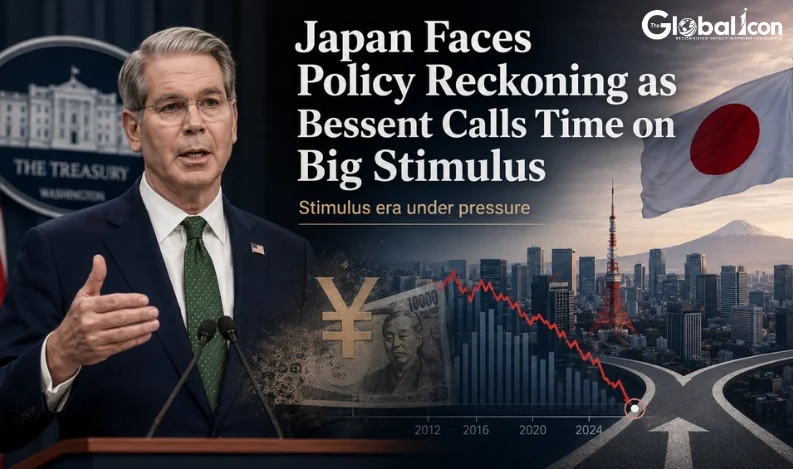
Japan is facing growing pressure to rethink its economic policies as the weakening yen, rising prices and heavy government spending create a difficult challenge for policymakers.
U.S. Treasury Secretary Scott Bessent has urged Japan to move toward higher interest rates and step away from the large-scale stimulus policies that have shaped the country's economy for more than a decade. His comments come just weeks after the United States and Japan joined forces in a rare intervention to support the yen.
Pressure Builds on the Bank of Japan
The Bank of Japan (BOJ) is already widely expected to raise interest rates at its September meeting as policymakers respond to continuing inflation and a weak yen. Markets are now watching closely to see whether the central bank could move faster with additional rate increases later this year.
The yen recently fell below 160 to the U.S. dollar, increasing concerns about the cost of imported goods and putting further pressure on Japanese households. A weaker currency makes energy, food and other imports more expensive, adding to the country's inflation problem.
Bessent has said he believes Japan's government and central bank will take steps that eventually strengthen the yen. He also said recent movements in the currency were relatively contained, reducing the immediate likelihood of another joint intervention.
End of the Abenomics Era?
Bessent's comments also signal a shift away from the economic approach known as Abenomics, introduced under former Prime Minister Shinzo Abe in 2013. The strategy relied heavily on monetary easing, government spending and measures aimed at boosting economic growth.
Bessent argues that Japan has already moved beyond the deflation that Abenomics was designed to fight and should now allow the benefits of those policies to run their course. His comments put additional pressure on Prime Minister Sanae Takaichi, whose government supports increased spending to boost investment and ease the impact of rising living costs.
Rising Debt Adds to the Challenge
Japan's spending plans have also raised concerns among investors. Increased government borrowing has pushed Japanese government bond yields to their highest levels in decades, reflecting worries about the country's already heavy debt burden.
For Japan, the policy challenge is becoming increasingly difficult. Raising interest rates could help support the yen and contain inflation, but tighter financial conditions could also make borrowing more expensive and put pressure on economic growth.
The coming months will therefore be important for the BOJ and the Japanese government. With markets expecting a September rate hike and Washington calling for a stronger policy response, Tokyo faces growing pressure to find a balance between supporting growth, controlling inflation and stabilizing the yen.
News Highlights:-