

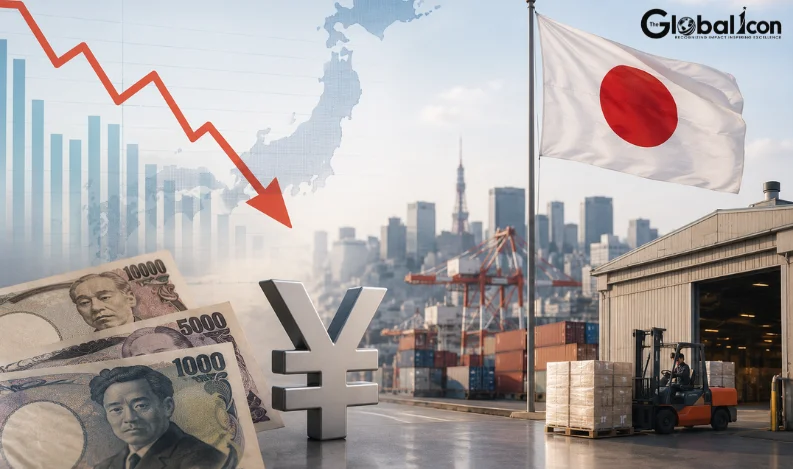
Japan’s wholesale inflation eased slightly in July, with producer prices rising 7.2% year on year, according to official data released Thursday. The figure came in below economists’ expectations of 7.4% and was also marginally lower than the revised 7.3% increase recorded in June.
The latest data suggests that price pressures at the producer level remain elevated, even as the pace of growth has started to moderate.
Electricity prices were one of the biggest contributors to the increase in July, adding around 0.23 percentage point compared with the previous month. However, declines in some energy and chemical prices helped offset part of the overall increase.
Weak Yen Keeps Import Costs High
Japan continues to face pressure from higher import costs, particularly as the weaker yen makes overseas purchases more expensive for domestic businesses.
The yen-based import price index rose 29.1% in July, although this was slightly lower than the 30.1% increase recorded in June. The data highlights how currency weakness continues to affect companies that depend on imported energy, raw materials and other goods.
The yen had fallen close to 164 against the U.S. dollar in late July, reaching levels not seen in decades before intervention by Japanese and U.S. authorities helped strengthen the currency.
However, much of that recovery has since faded, with the yen once again moving closer to the 160-per-dollar level.
Consumer Inflation Remains Lower
While producer prices remain high, consumer inflation has been relatively moderate.
Japan’s headline consumer inflation stood at 1.9% in June, while core inflation came in at 1.6%. Government subsidies aimed at reducing household energy costs have helped limit the impact of higher wholesale and import prices on consumers.
The gap between producer and consumer inflation remains important for policymakers, as businesses may eventually pass more of their rising costs on to customers.
Bank of Japan Watches Inflation Risks
The Bank of Japan is closely monitoring price developments as it considers its next steps on interest rates.
At its July policy meeting, several board members warned that higher oil prices and continued yen weakness could create additional inflation risks. Some policymakers also suggested that interest rates may need to rise more quickly if inflationary pressure becomes more persistent.
For now, the slight slowdown in wholesale inflation provides some relief, but elevated energy costs, expensive imports and continued currency weakness mean price pressures remain a major concern for Japan’s economy.
News Highlights:-