
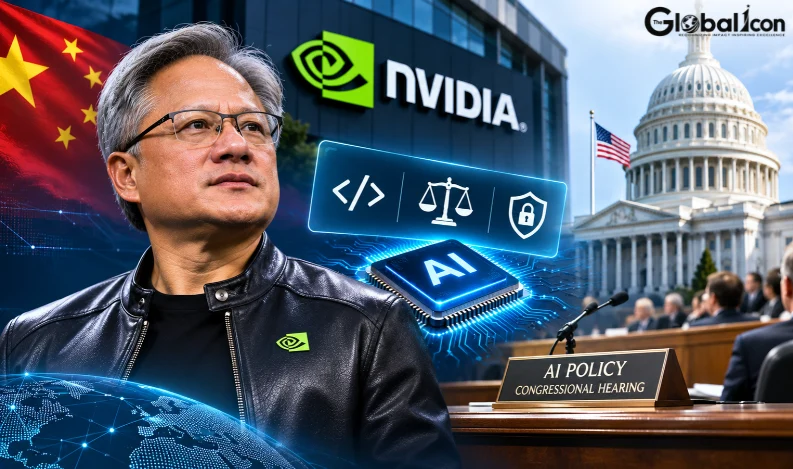
Nvidia co-founder Jensen Huang's return as chief executive has brought renewed attention to the debate over open-weight artificial intelligence models in Washington, as US policymakers consider how to balance technological innovation, national security and competition with China.
Nvidia's board reinstated Huang as president and CEO on November 23, 2026, following his resignation earlier in the month amid reports of personal relationships involving a businesswoman suspected by US officials of having links to Chinese intelligence.
His return has renewed questions about the influence of major technology executives on America's AI policies, particularly as Nvidia remains central to the global semiconductor industry.
Why Open-Weight AI Matters
Open-weight AI models allow developers to download, modify and adapt models for different applications. Unlike closed AI systems offered through controlled platforms, they give businesses, researchers and governments greater flexibility over how they use the technology.
Huang has been a prominent supporter of open-weight AI development in the United States. He has argued that excessive restrictions could weaken American innovation and allow Chinese technology companies to gain a stronger position in the global AI market.
For Nvidia, the technology also represents a significant commercial opportunity because wider AI adoption can increase demand for its graphics processing units and computing infrastructure.
Washington Divided Over AI Safety
The Trump administration has expressed support for open-weight models, viewing them as an important tool for maintaining US technological competitiveness.
However, companies such as OpenAI and Anthropic have raised concerns about the potential risks of making powerful AI models widely available. These include the possibility of misuse for cyberattacks, biological threats and other harmful activities.
The debate has become more complicated as Chinese developers, including DeepSeek and Alibaba, gain international attention with relatively affordable AI models.
Congress Seeks Greater Accountability
Huang's reinstatement has also attracted bipartisan scrutiny in Washington. Lawmakers want explanations about the circumstances surrounding his return, the government's involvement in Nvidia's leadership decision and the company's dealings involving advanced AI chip exports to China.
Huang is expected to face congressional questioning in December.
The developments place Nvidia at the centre of two major policy debates: America's competition with China in artificial intelligence and the question of how openly powerful AI technology should be distributed.
For the US technology industry, the outcome could influence future AI regulation, semiconductor exports and the competitive position of domestic developers.
News Highlights:-