

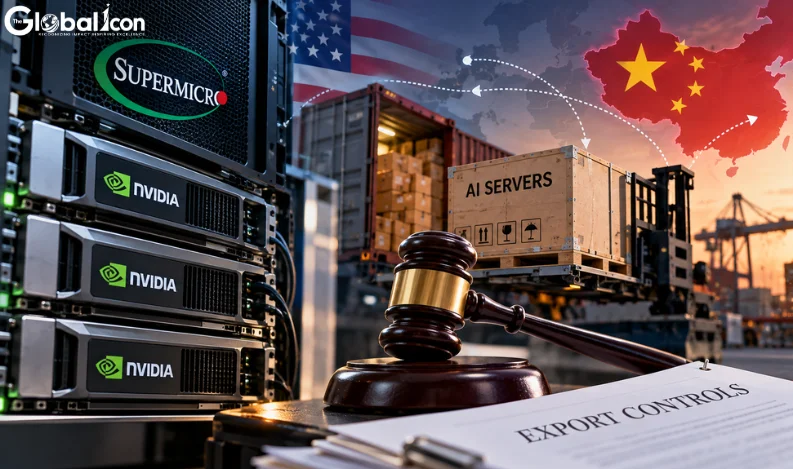
A contractor linked to Super Micro Computer has pleaded guilty to participating in a scheme to illegally export advanced artificial intelligence servers containing Nvidia chips to China. The case involves allegations that approximately $2.5 billion worth of restricted US AI technology was targeted for diversion without the required export licences.
Ting-Wei “Willy” Sun entered his guilty plea in a federal court in Manhattan on October 8, 2026, according to court records. The case highlights growing scrutiny of the international supply chain for advanced AI hardware as the United States tightens controls on sensitive technology exports to China.
Contractor Admits Role in Illegal Export Scheme
Sun pleaded guilty to four federal charges, including conspiracy to violate US export controls, smuggling goods from the United States, defrauding the US government and obstructing justice.
US prosecutors charged Sun and two other individuals associated with Super Micro in March 2026. The other defendants include company co-founder Yih-Shyan “Wally” Liaw and sales manager Ruei-Tsang “Steven” Chang.
According to the indictment, the alleged scheme involved attempts to ship restricted computer servers to China without the necessary authorisation. Prosecutors said the operation began around October 2023 and used arrangements intended to conceal the final destination of the equipment.
Alleged Scheme Involved $2.5 Billion in AI Technology
Prosecutors allege that the wider conspiracy sought to divert around $2.5 billion worth of US AI technology to China. The servers contained advanced Nvidia graphics processing units (GPUs), which are used to power demanding AI training and computing workloads.
The indictment identifies Nvidia’s B200, H100 and H200 chips, along with servers containing these processors, among the technology subject to US export restrictions.
The alleged operation involved using a company in Southeast Asia as an intermediary to conceal the China-based end customers. Investigators also described the use of staged equipment and misleading representations during inspections as part of efforts to hide the shipments.
US Export Controls Target Advanced AI Chips
Washington has imposed restrictions on the export of certain high-performance AI chips and computing systems to China without the required licences. US officials have cited national security concerns and the potential use of advanced computing technology in sensitive military and strategic applications.
The restrictions have created compliance challenges for technology manufacturers, distributors and logistics companies that handle advanced processors and AI servers. Businesses must verify end users and destinations and ensure that shipments meet applicable export regulations.
The case illustrates how authorities are investigating alleged attempts to bypass these controls through intermediaries and misleading shipping arrangements.
Super Micro Says It Is Not a Defendant
Super Micro Computer has previously stated that the company was not named as a defendant in the indictment and that the case had not affected its business operations. The company had also indicated that it had severed ties with the individuals implicated in the case.
The guilty plea concerns Sun’s role in the alleged scheme. The broader case also involves the other individuals charged by US prosecutors, and their legal proceedings remain separate.
Case Highlights Risks in the Global AI Supply Chain
The case comes as the United States and China continue competing for leadership in artificial intelligence, a sector that depends heavily on advanced processors, high-performance servers and large-scale computing infrastructure.
For technology companies, the investigation underscores the importance of export compliance and supply-chain oversight. Authorities are paying close attention to how restricted AI hardware is sold, transported, and delivered to its final users.
Sun’s guilty plea marks a significant development in the investigation, while the wider proceedings will determine the legal outcomes for the other individuals accused in the case.
News Highlights:-