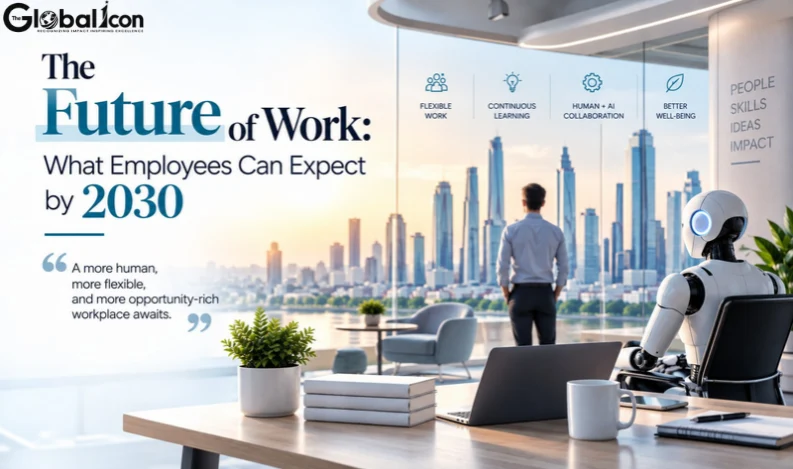

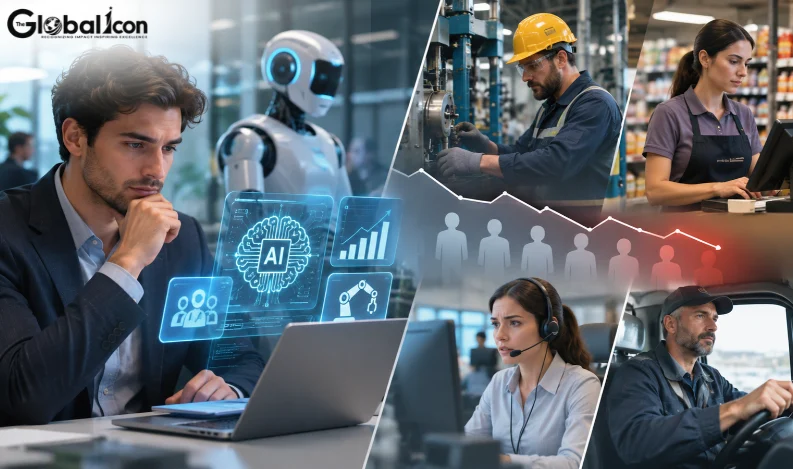
Artificial intelligence is rapidly transforming the global workforce. From finance and healthcare to marketing, education, manufacturing, and media, AI is changing how businesses operate and how employees perform their jobs.
AI tools can now write content, analyze data, process documents, generate designs, assist with coding, and handle customer queries. As companies increasingly adopt these technologies, concerns about job security are growing.
But will AI replace traditional jobs, or will it simply change how people work?
The reality is that AI is more likely to automate specific tasks than eliminate entire professions. Careers involving repetitive and predictable activities face greater pressure, while roles requiring human judgment, creativity, leadership, and emotional intelligence remain more resilient.
AI Jobs vs Traditional Jobs: Understanding the Difference
AI-related careers focus on developing, managing, and implementing artificial intelligence. These include:
- Machine Learning Engineers
- AI Researchers
- Data Scientists
- AI Product Managers
- Robotics Engineers
- AI Security Specialists
Traditional careers include accountants, teachers, journalists, lawyers, doctors, designers, marketers, and financial analysts.
However, the distinction between these professions is becoming less important. Traditional professionals who understand and use AI effectively may gain a competitive advantage over those who rely entirely on conventional methods.
Why Are Some Careers More at Risk From AI?
Jobs involving repetitive, predictable, and rules-based activities are easier to automate.
Careers face higher automation risks when they involve:
- Repetitive daily tasks
- Standardized processes
- Large volumes of digital information
- Routine decision-making
- Limited human interaction
- Easily measurable outputs
In contrast, professions requiring complex judgment, creativity, trust, negotiation, and physical adaptability are generally more resistant to automation.
Careers Most at Risk From Artificial Intelligence
Several traditional professions are experiencing increasing automation pressure.
1. Data Entry and Processing
Risk Level: Very High
AI can extract information from documents, organize records, process forms, and transfer data automatically. This reduces the need for manual data entry and repetitive processing.
2. Administrative and Clerical Work
Risk Level: High
Scheduling, preparing reports, managing emails, organizing documents, and recording meeting notes can increasingly be handled by AI assistants and automation tools.
3. Customer Service
Risk Level: High
AI chatbots and virtual agents can answer common questions, process requests, and provide basic troubleshooting. Human professionals will remain important for complex complaints and sensitive customer interactions.
4. Telemarketing and Basic Sales
Risk Level: High
AI-powered voice systems can manage scripted conversations, qualify leads, and schedule appointments. However, relationship-based sales and complex negotiations still require human involvement.
5. Bookkeeping and Routine Accounting
Risk Level: Moderate to High
AI can automate invoice processing, expense categorization, payroll calculations, and financial reporting. Accountants will increasingly focus on financial planning, auditing, advisory services, and strategic decisions.
6. Generic Content Writing
Risk Level: Moderate to High
Generative AI can quickly produce basic articles, product descriptions, social media captions, and email templates. However, original reporting, interviews, storytelling, research, and editorial judgment remain valuable.
7. Basic Graphic Design
Risk Level: Moderate
AI design tools can generate advertisements, illustrations, social media graphics, and presentation assets. Brand strategy, creative direction, visual identity, and audience understanding still require professional expertise.
8. Translation
Risk Level: Moderate to High
AI can translate routine documents and website content. Specialized translation involving legal, medical, literary, and cultural context still requires human expertise.
9. Junior Software Development
Risk Level: Moderate
AI coding assistants can generate code, identify errors, and automate basic programming tasks. Developers with expertise in architecture, cybersecurity, system design, and complex integrations remain important.
10. Entry-Level Financial Analysis
Risk Level: Moderate
AI can collect financial information, update spreadsheets, prepare reports, and analyze historical data. Human professionals remain essential for interpreting results and making strategic recommendations.
Traditional Careers That Are More Resistant to AI
Although AI will influence almost every industry, some professions remain difficult to automate completely.
Healthcare Professionals: Doctors, nurses, surgeons, and therapists rely on clinical judgment, patient relationships, physical examinations, and professional responsibility.
Skilled Trades: Electricians, plumbers, mechanics, and construction specialists work in unpredictable physical environments that are difficult to automate.
Teachers and Educators: Teaching involves motivation, classroom management, emotional understanding, and personal guidance beyond simply delivering information.
Leadership and Management: Business leaders make strategic decisions, manage teams, resolve conflicts, and take responsibility for organizational outcomes.
Psychologists and Therapists: These professions depend on trust, empathy, emotional understanding, and individual care.
Complex B2B Sales: High-value sales require negotiation, relationship-building, stakeholder management, and long-term trust.
AI Automates Tasks Before Eliminating Jobs
One of the most important aspects of workplace automation is understanding that AI generally replaces individual tasks rather than entire professions.
For example, a journalist can use AI to summarize documents, research information, and prepare initial drafts. However, conducting interviews, verifying information, identifying original stories, and making editorial decisions still require human expertise.
The same applies to marketing, finance, law, healthcare, and other industries.
The future of work will increasingly combine human judgment with AI-powered efficiency.
New Career Opportunities Created by AI
Artificial intelligence is not only changing existing professions but also creating new employment opportunities.
Some growing AI-related career areas include:
- AI and Machine Learning Engineering
- Data Engineering
- AI Product Management
- Cybersecurity
- AI Governance and Compliance
- Robotics Engineering
- AI Implementation Consulting
- Human-AI Workflow Design
Professionals with industry knowledge and AI expertise may have a significant advantage in the evolving job market.
How Professionals Can Prepare for the AI-Driven Job Market
Rather than avoiding AI, professionals should learn how to use it effectively within their industries.
Important steps include:
1. Learn AI Tools: Understand the technologies being adopted in your profession.
2. Build Industry Expertise: Develop specialized knowledge that helps you evaluate AI-generated information and make informed decisions.
3. Focus on Problem-Solving: Move beyond routine execution toward analysis, interpretation, and strategic thinking.
4. Strengthen Human Skills: Communication, leadership, creativity, negotiation, and emotional intelligence will remain important.
5. Continue Learning: Regularly update your technical and professional skills as workplace requirements change.
Should Students Choose AI Careers or Traditional Careers?
Students do not necessarily need to abandon traditional professions to build successful careers.
Medicine, finance, law, engineering, marketing, design, and education will continue to offer opportunities, but their requirements will evolve.
A stronger approach is to combine professional expertise with AI knowledge.
For example, finance professionals who understand AI, healthcare specialists who use intelligent diagnostic tools, and marketers who combine creativity with AI-powered analytics can develop valuable career profiles.
Will AI Create More Jobs Than It Replaces?
The long-term impact of AI on employment remains uncertain. While automation may reduce demand for certain roles, it is also creating new opportunities in technology, cybersecurity, robotics, AI governance, and digital business operations.
The major challenge will be helping workers develop the skills needed for these emerging roles.
Continuous learning and professional reskilling will become increasingly important.
Final Verdict: Which Careers Are Most at Risk?
Careers involving repetitive, predictable, and digital tasks face the greatest automation pressure. Data entry, routine administration, basic customer support, telemarketing, bookkeeping, and generic content production are among the most exposed.
Meanwhile, professions requiring human judgment, creativity, emotional intelligence, leadership, specialized knowledge, and physical adaptability are relatively more resilient.
However, no career is completely protected from technological change.
The strongest career strategy is to combine human expertise with artificial intelligence. Professionals who understand their industries and know how to use AI effectively will be better positioned to adapt to the changing world of work.
The important question is no longer whether AI will replace your job, but how you can use AI to become more valuable in your profession.
Frequently Asked Questions
1. Which careers are most at risk from AI?
Data entry, routine administration, telemarketing, basic customer support, bookkeeping, and generic content writing face significant automation risks.
2. Which jobs are relatively safe from AI?
Healthcare, skilled trades, teaching, leadership, therapy, and complex relationship-based sales are relatively more resistant because they require human judgment and interaction.
3. Will AI replace traditional jobs?
AI will automate many tasks within traditional professions, but most occupations are more likely to evolve than disappear completely.
4. Are creative careers at risk from AI?
Basic content and design production face automation pressure, but original storytelling, creative strategy, brand development, and editorial judgment remain valuable.
5. What skills should professionals develop for the AI era?
AI literacy, critical thinking, communication, creativity, problem-solving, leadership, adaptability, and industry expertise will be increasingly important.
6. Is an AI career better than a traditional career?
Not necessarily. Combining traditional industry knowledge with AI capabilities can create strong long-term career opportunities.
Featured Articles:-