

About
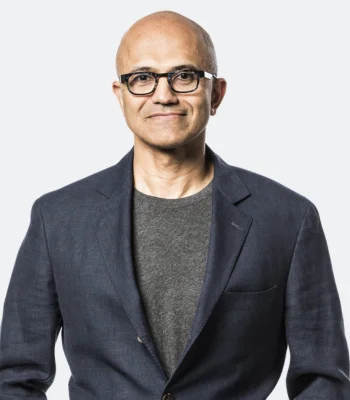
Some leaders inherit successful companies. Others inherit expectations so immense that even maintaining momentum seems like an achievement. Satya Nadella faced something far more challenging when he stepped into the role of Microsoft's Chief Executive Officer in 2014. He wasn't simply expected to lead one of the world's largest technology companies, he was expected to redefine its future during one of the most transformative periods in the history of technology.
At the time, Microsoft remained a global giant, but the technology landscape was changing rapidly. Cloud computing was gaining momentum, mobile devices were reshaping consumer behaviour, and new competitors were challenging long-established market leaders. Many questioned whether Microsoft could once again become the company setting the pace for innovation rather than responding to it.
Nadella approached that challenge differently from many corporate leaders. Rather than beginning with products or financial targets, he began with culture. He believed that organizations achieve extraordinary results when they create an environment where people continuously learn, collaborate, and embrace change. This philosophy gradually transformed Microsoft from within, encouraging curiosity over certainty and collaboration over internal competition. The cultural shift became just as significant as the technological transformation that followed.
Born in Hyderabad, India, Satya Nadella developed an early fascination with technology while also nurturing interests beyond engineering. He has often spoken about the influence of cricket on his leadership philosophy, explaining how the sport taught him the importance of teamwork, patience, adaptability, and trusting others. These lessons would later become central to his approach as a global business leader.
After completing his engineering education in India, Nadella moved to the United States to pursue higher studies in computer science before earning an MBA while simultaneously building his career. He joined Microsoft in 1992, long before the company entered the cloud computing era. Over the next two decades, he held leadership positions across several divisions, gaining firsthand experience in enterprise technology, online services, and cloud infrastructure.
Those years provided something invaluable, they allowed him to understand Microsoft's strengths, recognize its limitations, and envision how the company could evolve. Rather than focusing solely on preserving Microsoft's legacy, Nadella recognized that its future depended on embracing entirely new opportunities.
When he became CEO, one of his earliest priorities was accelerating Microsoft's cloud-first strategy. Azure quickly evolved into one of the world's leading cloud computing platforms, enabling businesses, governments, healthcare organizations, educational institutions, and startups to modernize their digital infrastructure. Under his leadership, cloud services became one of Microsoft's strongest growth engines, fundamentally reshaping the company's business model and expanding its influence across virtually every industry.
Nadella also understood that partnerships could create greater value than competition alone. Instead of treating competing platforms as adversaries, Microsoft increasingly embraced openness and interoperability, strengthening relationships with developers, enterprises, and technology partners worldwide. This more collaborative mindset broadened Microsoft's reach and reinforced its relevance in an increasingly connected digital economy.
His leadership became even more visible as artificial intelligence emerged as one of the defining technologies of the decade. Long before AI became a mainstream business priority, Microsoft had invested heavily in research, cloud infrastructure, and machine learning capabilities. Those investments positioned the company to integrate generative AI across products used daily by millions of professionals and organizations. From intelligent productivity tools to enterprise AI solutions, Microsoft's strategy under Nadella has demonstrated how innovation can enhance human potential rather than simply automate processes.
"Our industry does not respect tradition, it only respects innovation." -- Satya Nadella
That philosophy is reflected throughout Microsoft's transformation. Rather than relying on its past achievements, the company continues to reinvent itself through continuous investment in emerging technologies, cybersecurity, cloud services, developer ecosystems, and responsible artificial intelligence.
Nadella's influence extends well beyond Microsoft's financial performance. His emphasis on empathy as a leadership strength has challenged long-standing assumptions about executive leadership. In an industry often associated with relentless competition, he has consistently advocated for listening, learning, and empowering people. His book, Hit Refresh, further explores these principles, illustrating how personal experiences, including raising a child with special needs, have shaped his perspective on leadership, innovation, and the responsibility businesses have toward society.
Major strategic acquisitions during his tenure, including LinkedIn, GitHub, Nuance Communications, and Activision Blizzard, have further strengthened Microsoft's ecosystem while expanding its capabilities across professional networking, software development, healthcare technology, gaming, and digital experiences. Each decision reflects a long-term vision rather than a short-term pursuit of growth.
Today, Satya Nadella is widely regarded as one of the defining business leaders of his generation. His journey demonstrates that true leadership is not measured by the size of an organization alone but by the ability to inspire transformation from within. By combining technological foresight with a people-first philosophy, he has guided Microsoft into a new era of innovation while setting an example for leaders navigating constant change.
As industries continue to evolve through artificial intelligence, cloud computing, and digital transformation, Nadella's legacy is already becoming clear. He has shown that the most influential CEOs are not simply those who build successful companies, they are those who cultivate cultures capable of adapting, learning, and shaping the future long after today's technologies have evolved.
From This Edition
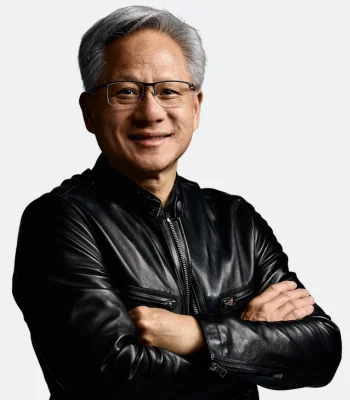
Jensen Huang
Founder & CEO
NVIDIA
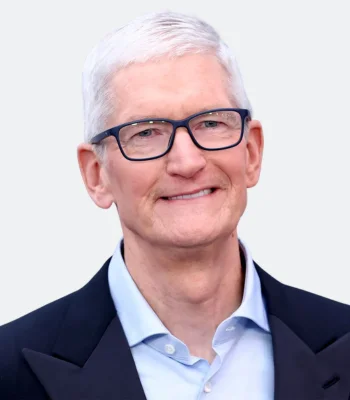
Tim Cook
CEO
Apple
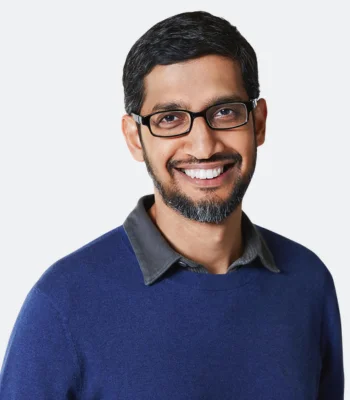
Sundar Pichai
CEO
Alphabet & Google
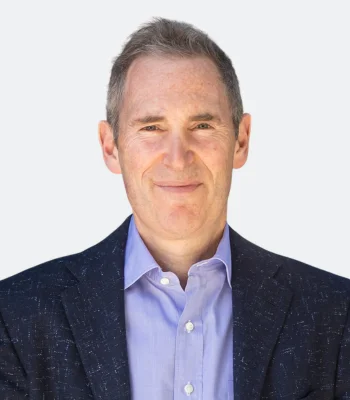
Andy Jassy
President & CEO
Amazon
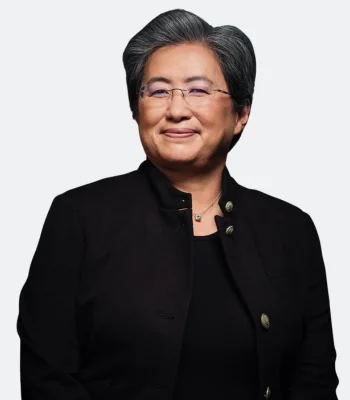
Lisa Su
Chair & CEO
AMD
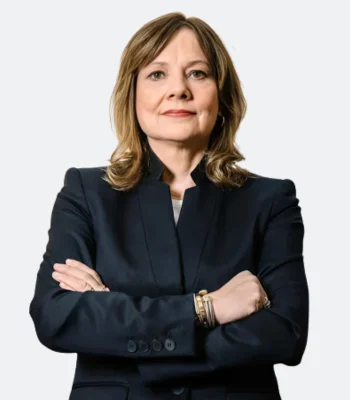
Mary Barra
Chair & CEO
General Motors

Marc Benioff
CEO & Co-Founder
Salesforce
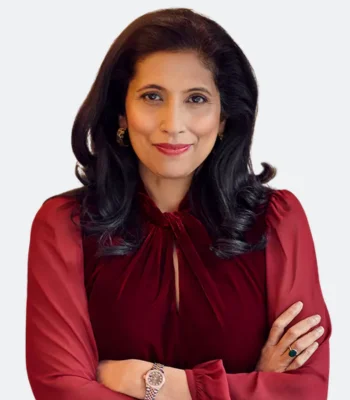
Leena Nair
Global CEO
Chanel
Other Top Lists
More curated leader rankings and spotlights
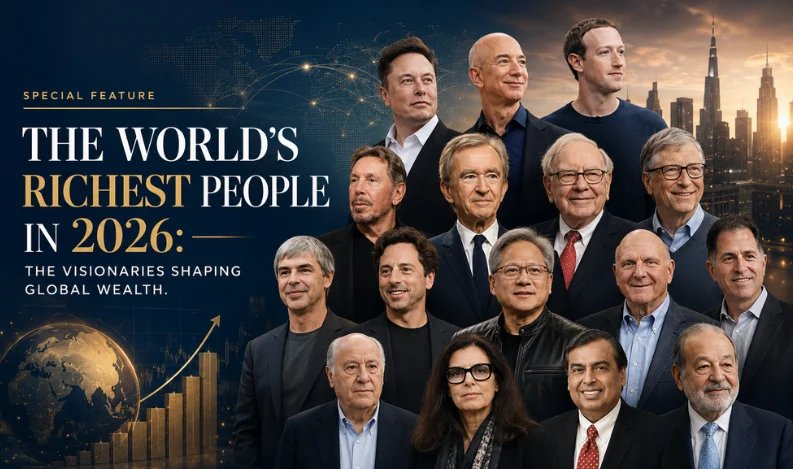
The World's Richest People in 2026: The Visionaries Shaping Global Wealth
Meet the world's richest people and the vision behind their extraordinary success.. Money may measure wealth, but behind every extraordinary fortune lies a story of vision, persistence, calculated risks, and the ability to identify opportunities long before the rest of …