

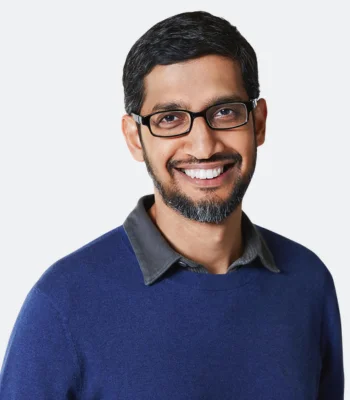
About
Some leaders transform companies by introducing revolutionary products. Others transform the world by making powerful technologies so accessible that billions of people begin using them without even realizing how profoundly their daily lives have changed. Sundar Pichai belongs to the latter category.
Every day, billions of searches, emails, maps, videos, documents, and AI-powered interactions connect people to information within seconds. Behind much of that digital ecosystem stands a quiet yet remarkably influential leader whose calm demeanor often contrasts with the enormous global impact of the organization he leads.
Unlike many technology executives known for bold public personalities, Sundar Pichai has built his reputation through thoughtful decision-making, technical expertise, and a leadership style centered on collaboration rather than charisma. His influence is not measured by headlines alone but by the extraordinary scale at which Google's technologies continue to shape education, healthcare, communication, business, and innovation across the world.
Growing up in Chennai, India, Pichai developed an early fascination with engineering and problem-solving. Those close to him often recall his remarkable memory and curiosity long before he entered the technology industry. After studying metallurgical engineering at the Indian Institute of Technology Kharagpur, he continued his education at Stanford University and later earned an MBA from the Wharton School, where he was recognized as both a Siebel Scholar and a Palmer Scholar.
Before joining Google in 2004, Pichai gained valuable experience in engineering and product management. Yet it was at Google where his ability to identify long-term opportunities truly emerged. He initially worked on the Google Toolbar, but soon recognized something that would significantly influence the future of the internet: web browsers would become central to how people experienced the digital world.
That insight eventually led to the creation of Google Chrome.
At a time when launching a new browser appeared unnecessary to many observers, Pichai believed that faster, simpler, and more secure browsing would encourage greater internet usage while creating opportunities for future web-based applications. Chrome not only became one of the world's most widely used browsers but also laid the foundation for ChromeOS and Google's broader cloud ecosystem.
His success with Chrome led to increasing responsibilities across Android, Google Drive, Gmail, Maps, Search, and numerous other products used by billions of people. Few executives in modern history have overseen a portfolio with such extraordinary global reach.
When Pichai became Google's CEO in 2015 and later Chief Executive Officer of Alphabet, he inherited the responsibility of leading one of the world's most influential technology companies during an era defined by rapid digital transformation. Rather than pursuing dramatic organizational changes, he focused on strengthening Google's ability to innovate responsibly while expanding investments in artificial intelligence, cloud computing, cybersecurity, quantum computing, and sustainable technologies.
Artificial intelligence has become one of the defining priorities of Pichai's leadership. Long before generative AI captured global attention, Google had invested heavily in machine learning research, natural language processing, and AI infrastructure. Today, products such as Gemini, Google Workspace AI capabilities, Cloud AI services, and Search enhancements demonstrate the company's continued commitment to integrating artificial intelligence into everyday experiences while emphasizing responsible development.
"Wear your failure as a badge of honor." -- Sundar Pichai
This philosophy reflects Pichai's belief that innovation requires experimentation, and meaningful progress often emerges from learning rather than perfection. Throughout his career, he has consistently encouraged teams to remain curious, challenge assumptions, and embrace calculated risks in pursuit of better solutions.
Beyond technology, Pichai has become an influential advocate for digital inclusion, education, and expanding access to information. He has frequently spoken about the responsibility technology companies carry in ensuring that innovation benefits society as a whole. Whether discussing internet accessibility, AI governance, or sustainability, his perspective emphasizes long-term societal value alongside commercial success.
Under his leadership, Alphabet has continued investing in ambitious initiatives spanning healthcare, autonomous mobility, cloud infrastructure, cybersecurity, quantum computing, and renewable energy. While Google's search business remains central to its success, Pichai has steadily diversified the company's focus toward technologies expected to shape the coming decades.
His leadership style is often described as calm, analytical, and people-centered. Rather than relying on dramatic public statements, he has built trust through consistency, thoughtful communication, and a willingness to listen before making decisions. In an industry where rapid change is constant, this balanced approach has helped Google navigate technological disruption while maintaining its position among the world's most influential companies.
Sundar Pichai's journey is a reminder that exceptional leadership is not always the loudest in the room. Sometimes, it is the quiet confidence to make thoughtful decisions, empower talented teams, and create technologies that improve billions of lives. Through his vision, Google has continued evolving from a search engine into an ecosystem that shapes how the world learns, works, communicates, and innovates.
From This Edition
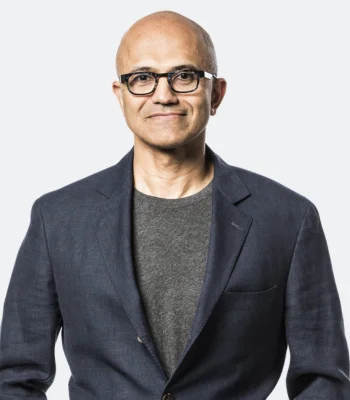
Satya Nadella
Chairman & CEO
Microsoft
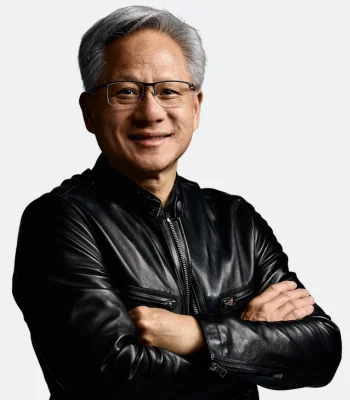
Jensen Huang
Founder & CEO
NVIDIA
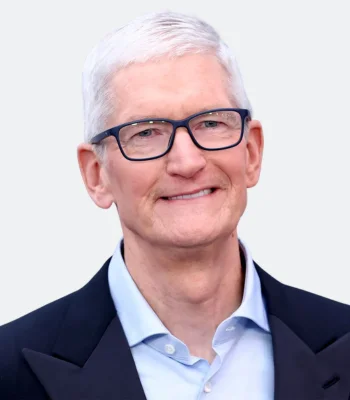
Tim Cook
CEO
Apple
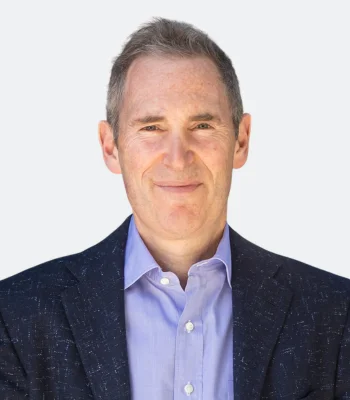
Andy Jassy
President & CEO
Amazon
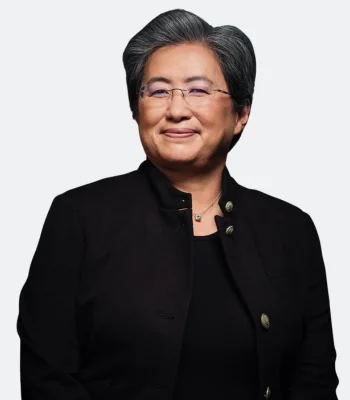
Lisa Su
Chair & CEO
AMD

Mary Barra
Chair & CEO
General Motors

Marc Benioff
CEO & Co-Founder
Salesforce
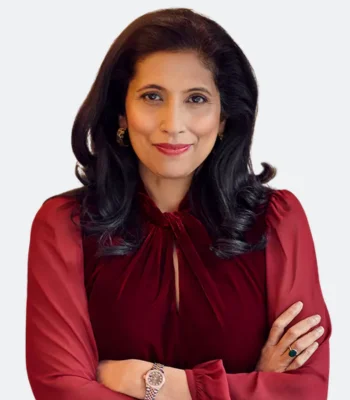
Leena Nair
Global CEO
Chanel
Other Top Lists
More curated leader rankings and spotlights
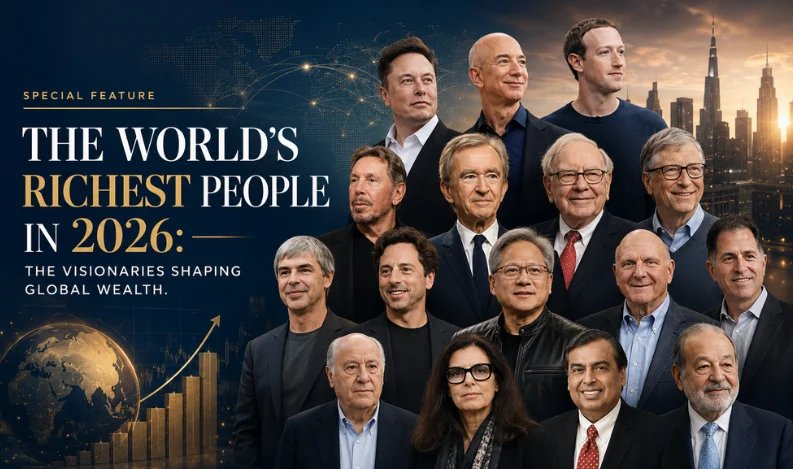
The World's Richest People in 2026: The Visionaries Shaping Global Wealth
Meet the world's richest people and the vision behind their extraordinary success.. Money may measure wealth, but behind every extraordinary fortune lies a story of vision, persistence, calculated risks, and the ability to identify opportunities long before the rest of …