

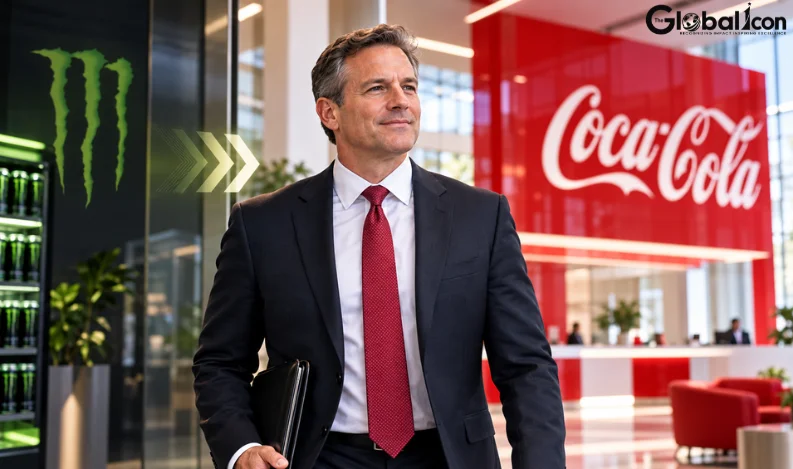
Coca-Cola is bringing back beverage-industry veteran Rob Gehring to lead its North American operations, appointing the former Monster Energy Americas CEO as president of its North America operating unit.
Gehring will take over the role on December 1, 2026, succeeding John Murphy, who has been running the unit on an interim basis since August 1. Murphy will continue serving as Coca-Cola’s president and chief financial officer.
Gehring Returns to Coca-Cola
The appointment marks Gehring’s return to Coca-Cola after several years working across major consumer and beverage companies.
He began his career with Coca-Cola in 1992, working in sales and marketing roles across the United States and Canada. Between 2011 and 2016, he served as president of Coca-Cola’s Walmart global team, giving him extensive experience working with one of the company’s largest retail customers.
Gehring later joined The Hershey Company as global chief sales officer before moving to Swire Coca-Cola USA, where he eventually became president and CEO. At Swire, he oversaw bottling operations across 17 states and a workforce of more than 8,000 employees.
Move From Monster Energy to Coca-Cola
Gehring joined Monster Energy in 2024 as chief growth officer and was promoted to CEO, Americas, in February 2026. In that position, he was responsible for Monster’s operations across North America, Latin America and the Caribbean.
Monster confirmed that Gehring will remain with the company through November 30, before formally joining Coca-Cola the following day. Emelie Tirre, Monster’s chief strategy officer, will take interim responsibility for the Americas and Caribbean operations after his departure.
Coca-Cola Faces a Changing Consumer Market
Gehring is returning to Coca-Cola at a time when beverage companies are competing for consumers who are increasingly balancing household budgets and changing their spending habits.
Coca-Cola reported 7% net sales growth in the second quarter of 2026, while comparable sales volume in North America increased 3%. Monster, meanwhile, reported 20.2% year-on-year net sales growth in the same quarter, highlighting the continued momentum of the energy-drink category.
His experience across soft drinks, energy drinks, retail and bottling gives him exposure to several parts of the beverage business as Coca-Cola works to maintain growth in its largest regional markets.
Focus on North American Growth
Coca-Cola CEO Henrique Braun said Gehring brings extensive operating experience and a long history with the Coca-Cola system. His new role will put him in charge of one of the company’s most important operating regions.
The company has been expanding beyond traditional carbonated soft drinks, with a portfolio that includes water, sports drinks, coffee, tea, juice and other beverage categories. That broader portfolio strategy is expected to remain important as consumer preferences continue to shift.
A Familiar Face Returns
Gehring’s appointment creates an unusual move within the beverage industry: a senior executive leaves a fast-growing energy-drink company to return to the global beverage giant where his career began.
For Coca-Cola, the priority now will be turning that experience into continued growth across North America. Gehring will officially begin leading the business on December 1, 2026.