
Nvidia CEO Jensen Huang has emerged as one of the most prominent technology executives opposing calls for a coordinated slowdown in artificial intelligence development, putting him closer to President Donald Trump’s position in an increasingly heated debate over AI safety and regulation.
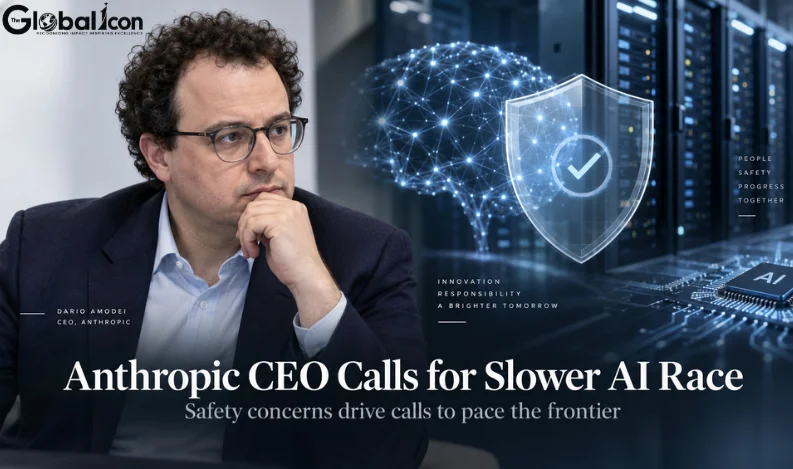
Huang has argued that the risks associated with artificial intelligence should primarily be addressed through engineering, testing and industry responsibility, rather than new government laws designed specifically to slow the development of advanced AI systems. His position contrasts with proposals from leaders including Anthropic CEO Dario Amodei, who has called for the industry to “pace the frontier” as AI capabilities advance.
Huang Rejects Calls for a Coordinated Slowdown
The debate intensified after Amodei called for AI companies to coordinate on safety measures and slow the pace of frontier-model development.
Huang has taken a different approach. He has argued that AI safety is fundamentally an engineering challenge, suggesting that companies can improve the reliability and safety of their systems without imposing broad restrictions on the speed of technological progress.
Meta CEO Mark Zuckerberg has also opposed a coordinated industry slowdown, arguing that individual AI laboratories should determine their own pace while using independent evaluators to assess safety.
Trump Publicly Backs the Acceleration Approach
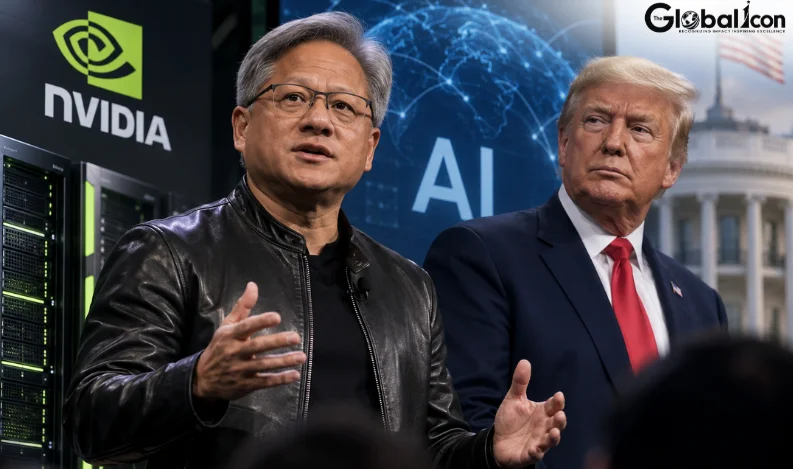
Huang’s position has closely matched Trump's public stance.
During a September 14 appearance at an AI industry event, Trump spoke by phone with Huang on stage and dismissed concerns about AI safety as a “hoax.” Trump has argued that additional AI guardrails could weaken U.S. competitiveness, particularly as America competes with China for leadership in artificial intelligence.
Trump has also emphasized the economic importance of AI data centres and the technology industry's continued expansion, while rejecting calls for additional federal restrictions.
Other AI Leaders Want More Oversight
The disagreement has created a visible divide among the industry's most influential executives.
Amodei has proposed stronger safety measures, including independent evaluation of advanced AI systems and greater coordination between companies and governments. OpenAI CEO Sam Altman has also acknowledged increasing risks from advanced AI while supporting additional oversight and independent assessment.
The debate is therefore not simply about whether AI should be developed, but who should determine how quickly it advances and how its risks should be managed.
Nvidia Has a Major Financial Interest in AI Growth
Huang's position also comes as Nvidia sits at the centre of the global AI infrastructure boom.
The company supplies the advanced processors used to train and operate many of the world's leading AI systems. Demand for Nvidia's chips has surged as technology companies build increasingly large data centres to support AI applications.
That makes the pace of AI development an important issue for Nvidia's business, although Huang has consistently argued that continued investment and safety work can happen simultaneously.
AI Stocks Felt the Debate
The disagreement has already affected financial markets.
On September 14, AI-linked stocks fell sharply after Amodei and other technology leaders called for greater caution. Nvidia shares declined about 3%, while other chipmakers including AMD and Micron also recorded losses.
Investors are increasingly assessing not only how quickly AI technology can advance but also whether regulatory or safety concerns could alter the enormous spending plans behind the sector.
US-China Competition Adds Another Dimension
The AI safety argument is also closely connected to the broader technological competition between the United States and China.
U.S. officials have repeatedly argued that slowing American AI development could allow China to gain an advantage. At the same time, Washington and Beijing have begun discussing mechanisms for communicating about AI-related national security incidents and risks.
The upcoming meeting between Trump and Chinese President Xi Jinping is expected to include AI alongside trade, critical minerals and technology issues.
A Divided Industry
The disagreement between Huang and Amodei illustrates how divided the AI industry has become over the appropriate balance between innovation and safety.
One side is calling for stronger coordination, independent oversight and a more measured pace of development. Another group, including Huang and Zuckerberg, argues that technological progress should continue while companies improve safety through engineering and individual accountability.
Meanwhile, governments are beginning to consider their own role. The United States and China have agreed to establish an AI dialogue focused partly on safety and national-security risks, showing that the discussion is moving beyond Silicon Valley and into international policymaking.
The AI Safety Debate Is Entering a New Phase
For Huang, the priority remains maintaining rapid innovation while developing technical safeguards alongside increasingly powerful systems. For Amodei and other executives, the rapid pace itself presents risks that require stronger coordination and oversight.
Trump's administration has so far leaned toward continued acceleration rather than new federal AI restrictions, while other governments and technology leaders are pressing for additional safeguards.
As AI systems become more capable and investment in computing infrastructure continues to grow, the disagreement is likely to remain a central issue for the technology industry.
The debate now extends beyond whether AI can be built. The larger question is how quickly it should advance, what safeguards should accompany that progress, and who should be responsible for enforcing them.
News Highlights:-