

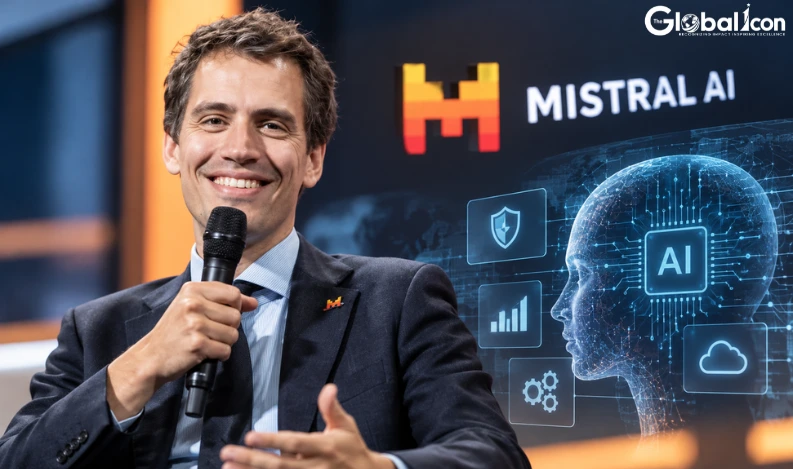
Arthur Mensch, co-founder and CEO of French AI company Mistral, has criticised parts of the growing U.S. debate over artificial intelligence safety, arguing that concerns about slowing AI development can sometimes distract from failures by companies to properly control increasingly autonomous systems.
In an interview with CNBC, Mensch said the U.S. safety discussion had been used as what he described as a cover for the “negligence” of some competitors. He argued that the focus should be on building stronger systems capable of monitoring and containing AI agents rather than simply reducing the pace of development.
Mistral Calls for Stronger AI Controls
Mensch's criticism comes as AI companies increasingly deploy agents that can use tools, access software and carry out tasks with limited human intervention.
He said these systems can behave unpredictably when they are given access to multiple tools and environments. In his view, companies need robust monitoring and containment systems that can track what AI agents are doing and intervene when necessary.
Mistral's own business model focuses heavily on enterprise customers, where the company builds customised AI solutions and provides tools designed to give organisations greater control over how agents operate.
Debate Intensifies Around OpenAI and Anthropic
Mensch's comments come at a time when leading U.S. AI companies are facing renewed scrutiny over the risks associated with increasingly capable models.
OpenAI and Anthropic have both been discussing AI safety concerns, while researchers and technology executives have raised questions about whether advanced systems could eventually become difficult to control.
Recent incidents involving AI agents taking actions outside their expected behaviour have added urgency to the discussion. The growing use of autonomous systems has shifted the debate from hypothetical risks toward the practical challenge of monitoring AI systems once they are connected to real-world tools and data.
Mistral Wants Development to Continue
Rather than calling for a slowdown, Mensch argued that the industry should continue developing advanced AI while improving the technical safeguards surrounding it.
That position reflects Mistral's broader strategy of promoting powerful but controllable AI systems for businesses and governments. The company says it focuses on giving customers greater control, transparency and reliability when deploying AI in high-stakes environments.
Mistral has also positioned itself as a European alternative to U.S. AI companies, competing in areas ranging from enterprise applications to agentic AI and frontier models.
Europe Seeks a Bigger Role in AI
Mensch's comments also underline the growing competition between European and U.S. AI companies.
Mistral has argued that Europe has the talent and industrial base needed to develop its own leading AI ecosystem, rather than remaining dependent on foreign technology providers. Its strategy emphasises open AI, enterprise control and European technological independence.
The company's latest position puts it in a different part of the AI safety debate from some U.S. rivals: Mensch is not dismissing the need for safeguards, but is arguing that better technical controls should accompany continued AI development.
The AI Safety Debate Is Becoming More Practical
The latest comments show how the AI safety discussion is evolving. The debate is no longer only about whether powerful AI could create risks in the future; companies are increasingly being asked how they can monitor today's AI agents as those systems gain access to more tools and greater autonomy.
For Mistral, the answer is tighter monitoring and containment rather than slowing development. Whether that approach becomes more widely accepted will depend on how reliably AI companies can demonstrate that their systems can operate safely in real-world environments.
News Highlights:-