
Sony Group and Taiwan Semiconductor Manufacturing Co. are preparing a major investment of about ¥1 trillion, or $6.3 billion, to develop and manufacture next-generation image sensors in Japan, according to a Nikkei report cited by Reuters.
The proposed venture would reportedly be 60% owned by Sony and 40% by TSMC, with commercial production potentially beginning as early as 2029. The companies are expected to work toward final investment terms in the coming months.
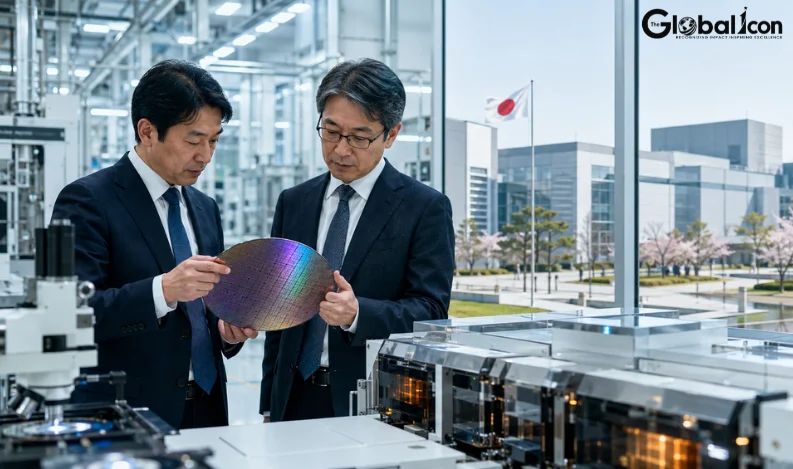
The project would establish development and production lines at Sony Semiconductor Solutions’ newly built fabrication facility in Koshi City, Kumamoto Prefecture, strengthening Japan’s role in the global semiconductor and advanced sensor supply chain.
Sony and TSMC deepen semiconductor partnership
Sony Semiconductor Solutions and TSMC first announced a preliminary agreement in May to explore a strategic partnership focused on next-generation image sensors.
Under the non-binding memorandum of understanding, Sony is expected to remain the majority and controlling shareholder of the planned joint venture. The companies said the partnership would combine Sony’s sensor design capabilities with TSMC’s manufacturing and semiconductor process expertise.
The exact investment structure had not been disclosed in that original announcement.
The latest report indicates that the proposed partnership could now involve approximately $6.3 billion in investment, although Sony and TSMC have not publicly confirmed the reported 60%-40% ownership structure or final investment amount.
Advanced sensors target cars, robotics and AI
Image sensors convert light into electronic signals and are widely used in smartphones, cameras, automobiles, industrial equipment and increasingly sophisticated robotics systems.
Sony is a global leader in image-sensor technology, while TSMC is the world’s largest contract semiconductor manufacturer. Their proposed collaboration is intended to improve sensor performance by bringing chip design and advanced manufacturing technologies more closely together.
The companies are also exploring applications connected to physical artificial intelligence, including autonomous vehicles and robotics, where advanced sensors are essential for machines to understand and respond to their surroundings.
That could make the partnership increasingly important as demand grows for sensors capable of delivering higher resolution, faster processing and improved performance under challenging conditions.
Kumamoto emerges as a semiconductor hub
Kumamoto has become an increasingly important location for semiconductor investment in Japan.
TSMC already has manufacturing operations in the region through Japan Advanced Semiconductor Manufacturing, while Sony has maintained a significant semiconductor presence in Kumamoto.
The proposed image-sensor venture would build development and production lines inside Sony’s new facility in Koshi City, further strengthening the semiconductor ecosystem developing in the region.
The partnership also comes as Japan seeks to rebuild domestic semiconductor manufacturing capacity and reduce its vulnerability to disruptions in global chip supply chains.
TSMC growth remains strong
The reported investment comes during another period of strong growth for TSMC.
The chipmaker recorded NT$467.58 billion in revenue in July 2026, representing growth of about 45% compared with the same month a year earlier. Revenue for the first seven months of the year was up approximately 37%.
TSMC has also reported particularly strong demand for advanced semiconductor technologies, supported by the continuing global investment boom in artificial intelligence infrastructure.
For Sony, deeper cooperation with TSMC could provide access to advanced manufacturing capabilities while allowing the Japanese technology group to concentrate more heavily on sensor design and product development.
If the proposed investment is finalized, the partnership would represent one of the most significant collaborations between two of the global semiconductor industry’s leading companies and could strengthen Japan’s position in next-generation imaging, automotive technology, robotics and AI hardware.
News Highlights:-