

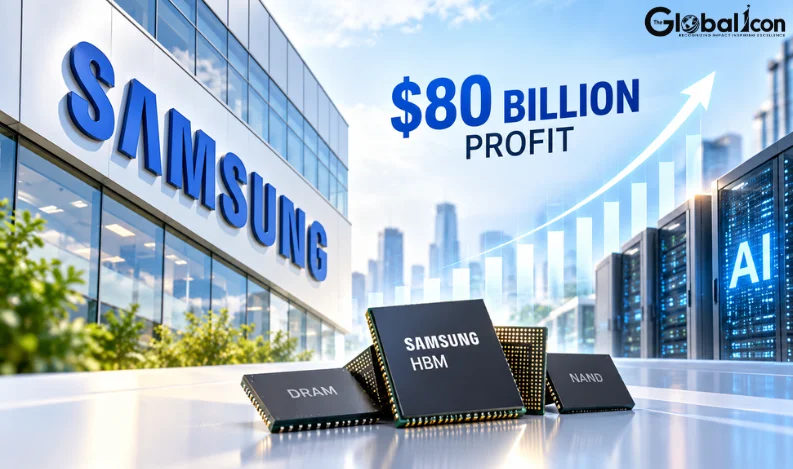
Samsung Electronics is on track to post a record quarterly operating profit of around $80.17 billion, as surging demand for artificial intelligence chips drives strong growth in its memory business. The company estimated third-quarter operating profit at 107.4 trillion won, nearly nine times higher than the same period last year.
AI Chip Demand Drives Record Earnings
The strong performance is largely linked to the global expansion of AI infrastructure. Demand for memory chips used in AI servers has increased sharply, pushing up prices of both conventional DRAM and NAND chips.
High-bandwidth memory (HBM), which is essential for handling the large volumes of data required by advanced AI systems, has also become an important growth area for Samsung.
Profit Crosses 100 Trillion Won
Samsung's estimated third-quarter operating profit would be the first time a technology company has crossed the 100 trillion won mark in a single quarter. Revenue is also expected to reach around 195 trillion won, representing a rise of about 127% from a year earlier.
The result would mark Samsung's fourth consecutive quarter of record operating profit, showing how strongly the semiconductor business has benefited from the AI-driven memory shortage.
Other Businesses Face Pressure
While the semiconductor division is benefiting from higher chip prices, Samsung's other businesses are facing challenges. Analysts expect the company's mobile and consumer electronics operations to feel pressure from rising memory costs.
Samsung's contract chipmaking business is also expected to remain loss-making, although improved demand for advanced manufacturing could support recovery in the coming quarters.
Final Results Due Later This Month
Samsung has not yet provided a detailed breakdown of its third-quarter performance. The company is expected to release its full earnings report, including results by business division, on October 29.
The record forecast underscores the enormous financial impact of the global AI investment cycle, while investors will now be watching whether strong chip demand and elevated memory prices can continue at the same pace.
News Highlights:-