

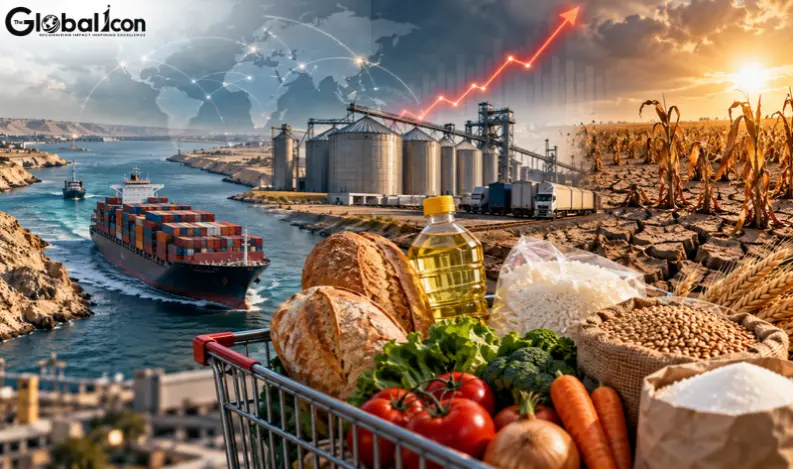
Global food inflation is expected to intensify through 2027 as geopolitical conflicts, extreme weather and rising agricultural costs put pressure on food supplies. Disruptions to major shipping routes, higher fuel and fertiliser prices, and concerns over crop production are pushing up commodity prices, raising the risk of more expensive groceries for households worldwide.
Geopolitical Conflicts Disrupt Food Supply Chains
Conflicts affecting the Strait of Hormuz and the Black Sea are creating challenges for global trade, increasing uncertainty over shipping routes, freight costs and the availability of key agricultural commodities.
The Strait of Hormuz is particularly important because disruptions to energy supplies can increase the cost of transporting food and manufacturing fertilisers. Meanwhile, restrictions and logistical difficulties around the Black Sea can affect grain exports from major producing regions.
Higher shipping and insurance costs can eventually reach importers, food processors and retailers, putting additional pressure on consumer prices, particularly in countries that depend heavily on imported food.
Extreme Weather Threatens Agricultural Production
Weather-related risks are adding to concerns about global food supplies. The expected development of El Niño conditions could bring irregular rainfall, drought and heat stress to agricultural regions, potentially reducing yields of important crops.
India and parts of Southeast Asia face concerns over rainfall patterns affecting rice and other crops, while adverse weather in major sugar-producing countries could tighten supplies. Dry conditions can also affect wheat and maize production, limiting availability in international markets.
Although global cereal stocks remain relatively substantial, declining production forecasts for some crops could leave markets more vulnerable if further weather disruptions occur.
Higher Fuel and Fertiliser Costs Push Prices Up
Farmers are facing higher costs for fuel, fertilisers, transportation and other agricultural inputs. When these expenses rise, producers may reduce fertiliser use, alter planting decisions or pass some of the additional costs on to buyers.
The Food and Agriculture Organization’s Food Price Index averaged 136.0 points in September 2026, increasing 1.5% from August and standing 5.8% above its level a year earlier. Cereal prices rose 5.1% month on month, while sugar prices increased 6.1%, reflecting tighter supply expectations and weather concerns.
These increases show how energy costs, transport disruptions and production risks can combine to affect international food markets, even when supplies of some commodities remain relatively strong.
Low-Income Households Face the Greatest Pressure
Rising food prices are likely to place the greatest burden on lower-income households, which spend a larger share of their budgets on essential goods. Countries that rely heavily on imported food may also face greater pressure on household purchasing power and public finances.
Food manufacturers and retailers could face higher operating costs, while governments may come under pressure to protect vulnerable consumers through targeted assistance and food-security programmes.
The outlook will depend on how long geopolitical disruptions continue, whether weather conditions worsen and how agricultural production responds to higher input costs. If several shocks persist simultaneously, food inflation could remain elevated through 2027, making affordability and food security increasingly important global concerns.
News Highlights:-